

『FCI Mass Flow Meter』Related information(clamp on meter|electromagnetic meter|venturi meterrotameter|orifice meter|ultrasonic flow meter|mass flow meter|coriolis mass flow meter|coriolis flow meter|magnetic flow meter|magmeter flow meter|magflow flow meter|mag meter flow meter|electromagnetic flow meter|vortex flow meter|turbine flow meter|thermal mass flow meter|thermal flow meter|rotameter flow meter)

1. What is a mass flow meter? A mass flow meter generally refers to a flow meter that can directly measure the mass flow reading. Specifically referring to flow meters that utilize the Coriolis principle. Mass flow rate=density x flow velocity x flow area (M=ρ ν A). When the density ρ in the equation is obtained by the self detection of the flow meter fluid, this type of flow meter can be called a mass flow meter. Mass flow meters can be divided into two types: direct and indirect. The working principle of the direct type is often related to the mass (density) of the medium, that is, it directly measures a signal proportional to ρ ν. At present, the most commonly used direct mass flow meters include mass flow meters that utilize the Coriolis principle and thermal flow meters that utilize the principle of heat exchange between fluids and solids. The former can only be used for liquid medium measurement, while the latter is mostly used for gas medium measurement. The indirect method measures the density of the medium while measuring the flow velocity, or measures the temperature and pressure of the medium and obtains the density through corresponding relationships, and derives the mass flow rate from the density, flow velocity, and flow area. The Coriolis force mass flowmeter, which utilizes the Coriolis principle, generates a force that causes a decrease in disk speed when a particle moves from the center along the radius towards the edge in a rotating disk. On the contrary, it will generate a force that causes the disk speed to increase or decrease. The magnitude of this force is directly related to the mass and velocity of the particle. The person who first systematically studied this phenomenon was called Coriolis,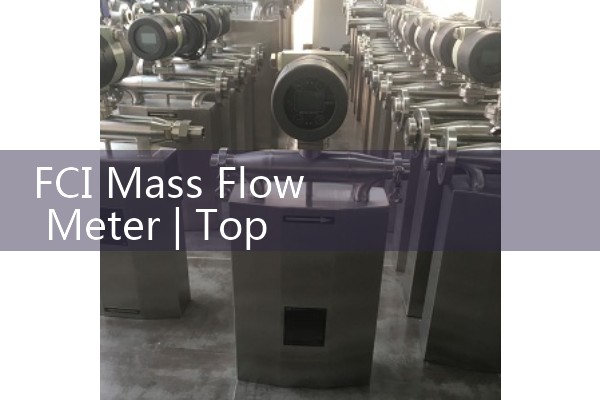
2. MFC Mass Flow Controller
MFC (Mass Flow Controller) is a stable flow device that can automatically control gas flow.
. MFC not only has the function of a mass flow meter, but a Hot News
 Related AD