

『Flow Meter for Gases Sizing: Selecting Thermal Mass vs Vortex for High-Pressure Lines』Related information(clamp on meter|electromagnetic meter|venturi meterrotameter|orifice meter|ultrasonic flow meter|mass flow meter|coriolis mass flow meter|coriolis flow meter|magnetic flow meter|magmeter flow meter|magflow flow meter|mag meter flow meter|electromagnetic flow meter|vortex flow meter|turbine flow meter|thermal mass flow meter|thermal flow meter|rotameter flow meter)
Flow Meter for Gases Sizing: Selecting Thermal Mass vs Vortex for High-Pressure Lines
Quick Answer
For high-pressure gas lines above 10 bar, vortex meters handle larger pipes and higher temperatures. Thermal mass meters work better for low flow, direct mass reading, and very low pressure drop. Send your gas composition, pressure in bar, temperature in °C, pipe size DN, and flow range to Silver Instruments. We will match the right meter to your line.
Why High-Pressure Gas Lines Are Different
Gas density changes with pressure. A pipe at 2 bar is not the same as a pipe at 40 bar. In high-pressure lines, engineers care about density compensation, temperature shifts, and pressure drop. A wrong flow meter can add measurement error, or worse, create a safety issue in a gas line.
Most engineers skip this part. They compare only flow range and price. But gas type and line pressure decide the physical limits of a meter.
We have seen this on customer sites many times. A natural gas line in Southeast Asia running at 35 bar was sized with a thermal mass meter. The meter worked for six months. Then flow dropped during low-load operation. The signal became unstable. The real problem was not the meter. The line pressure was not steady. The thermal sensor needed a minimum gas velocity to remove heat. In low flow, the reading drifted.
Thermal Mass Flow Meter for High-Pressure Gas
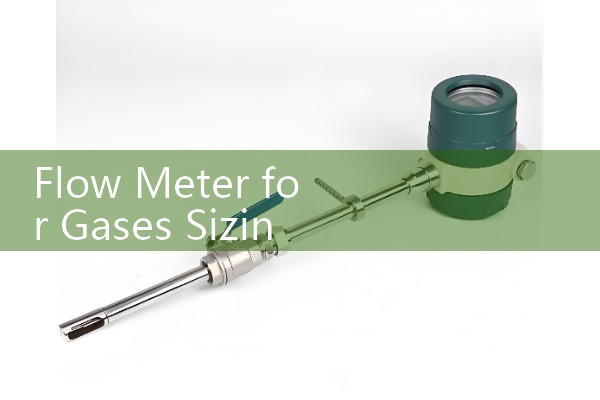
Thermal mass meters use two PT100 sensors. One sensor heats. The other sensor reads gas temperature. The meter measures how much heat the gas removes. This gives direct mass flow in kg/h or standard cubic meters per hour. No pressure and temperature compensation is needed for mass flow. That helps when gas composition is stable.
In practice, thermal mass meters work well for leak detection, flare gas monitoring, and compressed air systems. They have a low flow cutoff. They handle velocities down to 0.5 m/s. Most vortex meters lose accuracy below 2 m/s to 3 m/s. Thermal mass meters also create very low pressure drop. This matters in high-pressure lines because any pressure loss costs energy.
But thermal mass has limits. Standard models handle pressure up to 40 bar or 60 bar. Some special designs go to 100 bar. The gas must be clean and dry. Liquid droplets or heavy condensate change the heat transfer. Temperature limits are often below 200 °C. For high temperature reactor gas, a thermal mass meter may not fit.
Vortex Flow Meter for High-Pressure Gas
Vortex meters use a bluff body in the flow path. The gas forms vortices downstream. A piezoelectric sensor counts the vortex frequency. That frequency is linear with flow velocity. The meter converts velocity to volumetric flow. For gas, you need pressure and temperature compensation to get mass flow or standard volume flow.
Vortex meters handle higher temperatures. Many models are rated for 250 °C to 400 °C. They come in DN15 to DN300 and larger. They work well in steam, compressed air, natural gas, and industrial gases. Pressure ratings go to PN40, PN64, even PN100 with special bodies. In high-pressure natural gas lines, a vortex meter is often the first choice because it handles wide pipe sizes and harsh conditions.
Here is the thing. Vortex meters need a minimum Reynolds number. In low flow, the vortex signal disappears. They also create pressure drop. If your line has a tight pressure budget, you need to calculate the permanent pressure loss. A vortex meter at 40 bar and high flow may create enough pressure loss to affect downstream processes.
Sizing Parameters You Must Send to a Supplier
We do not quote a gas flow meter without five data points. Gas composition, pressure, temperature, pipe size, and flow range. Add accuracy requirement if you have one. For high-pressure lines, also state if the pressure varies. A pressure swing from 20 bar to 45 bar changes gas density and affects the meter output.
Example. A customer in Vietnam needed a flow meter for a hydrogen line at 25 bar. Pipe size DN50. Flow range 5 kg/h to 120 kg/h. Temperature 30 °C to 80 °C. The thermal mass meter was suitable because flow range was wide and pressure was stable. But another customer in UAE needed a meter for flare gas at 70 bar, DN150, flow 800 kg/h to 8000 kg/h, temperature up to 150 °C. We recommended a vortex meter with pressure and temper
Both thermal mass and vortex meters can output 4-20 mA HART. For gas flow, a multivariable transmitter can also output Modbus or pulse. Ask for these options when you send an inquiry.
Which Meter Wins for High-Pressure Gas Lines
Both meters have a place. Thermal mass wins when you need direct mass flow, low flow, low pressure drop, and clean dry gas. Vortex wins when you have high temperature, large pipe, or dirty gas. In high-pressure lines, the choice often comes down to flow range and pipe size. A DN80 high-pressure natural gas line at 30 bar with flow from 40 kg/h to 400 kg/h may fit a thermal mass meter. A DN200 line at 60 bar with flow from 2000 kg/h to 20000 kg/h needs a vortex meter.
Installation Notes for High-Pressure Gas Lines
Both meters need straight pipe. Thermal mass insertion models need 15D to 20D straight run upstream. Vortex meters need 10D to 15D upstream depending on the piping. High-pressure gas lines often have bends, valves, and filters. If you cannot provide enough straight run, we can add a flow conditioner.
Do not install a vortex meter downstream of a control valve that creates swirling flow. The vortex signal will be noisy. For thermal mass meters, install the sensor in a location with stable velocity profile. Avoid condensation pockets. In high-pressure gas lines, pressure reduction can cool the gas. If the gas is near its dew point, liquid droplets form. That affects both meter types.
Calibration and Accuracy
Thermal mass meters are often calibrated for a specific gas composition. Order one for natural gas, air, or nitrogen. If you switch gases, you need a correction factor. Vortex meters do not care about gas composition for velocity measurement. But the pressure and temperature compensation must use the right gas properties. A flow computer or transmitter does that calculation.
Typical accuracy for thermal mass is plus or minus 1.0 to 1.5 percent of full scale. Vortex meters offer plus or minus 0.75 to 1.0 percent of reading for liquids and gases. For gas flow, accuracy depends on installation and compensation. We have seen some users compare the raw pulse output without compensation and call it inaccurate. That is not a fair comparison.
FAQ
Q: Which flow meter is better for a high-pressure natural gas line at 40 bar?
A: It depends on pipe size and flow range. For DN50 to DN100 and low to medium flow, thermal mass may work. For DN150 and above with high flow, vortex is usually better. Send the five data points for a firm recommendation.
Q: Can a thermal mass flow meter handle high pressure hydrogen gas?
A: Yes, up to the pressure limit of the sensor. Many models handle 40 bar or 60 bar. Hydrogen has low density. Specify the gas composition and pressure. The meter must be calibrated for hydrogen or use a conversion factor.
Q: Does a vortex flow meter need pressure and temperature compensation for gas?
A: Yes, if you need mass flow or standard volume flow. The meter measures actual flow rate. Without compensation, the reading changes with pressure and temperature. Use a multivariable transmitter or external pressure and temperature sensors.
Q: What is the minimum flow for a vortex meter in high-pressure gas?
A: It depends on gas density and pipe size. Higher pressure improves the signal because gas density is higher. In a 40 bar natural gas line, a DN50 vortex meter may measure down to 30 kg/h. In a 10 bar air line, the minimum may be 50 kg/h. Always calculate the Reynolds number.
Q: How do I get a price for a gas flow meter from Silver Instruments?
A: Send your gas composition, pressure in bar, temperature in °C, pipe size DN, and flow range. Also state if the area is ATEX Zone 1 or Zone 2. Contact us by Tel: +86-25-68650347, Whatsapp: +86-25-52155837, WeChat: +86 15365082610. We will reply with a model and quote within 24 hours.
If you are sizing a gas line today, do not guess. Send the data to Silver Automation Instruments. We supply thermal mass flow meters, vortex flow meters, and other gas measurement tools for projects in Southeast Asia, the Middle East, Latin America, and Africa.
 Hot Product
 Related AD