

『Low Volume Liquid Flow Meter Calibration: Testing K-Factor Pulse Scales for Additive Chemical Loops』Related information(clamp on meter|electromagnetic meter|venturi meterrotameter|orifice meter|ultrasonic flow meter|mass flow meter|coriolis mass flow meter|coriolis flow meter|magnetic flow meter|magmeter flow meter|magflow flow meter|mag meter flow meter|electromagnetic flow meter|vortex flow meter|turbine flow meter|thermal mass flow meter|thermal flow meter|rotameter flow meter)
Low Volume Liquid Flow Meter Calibration: Testing K-Factor Pulse Scales for Additive Chemical Loops
Quick Answer: Low volume additive chemical loops need a flow meter calibration with process fluid or a matched viscosity surrogate. Check the K factor at 10 percent, 50 percent, and 100 percent of the dosing range. Use a DN2 to DN15 meter with 0.2 to 0.5 percent repeatability and a pulse output scaled in pulses per liter or pulses per kilogram.
Why Additive Chemical Loops Need a Different Calibration Approach
Additive dosing lines run at very low flow rates. A scale inhibitor line can run at 0.5 L/h. A corrosion inhibitor pump can operate at 2 L/h. The flow signal is small. Meters in this range react strongly to viscosity, temperature, and pulsation.
Water bench calibration is common. Here is the thing. A water calibration is only a starting point. Many additives do not behave like water. Polymer based scale inhibitors can leave a thin film on the rotor. Sodium hypochlorite can release gas bubbles at low pressure. So a water K factor can drift on the real chemical.
What Is a K Factor Pulse Scale in a Low Volume Meter
A flow meter with pulse output sends a square wave signal to a PLC or dosing controller. The K factor is the number of pulses per unit volume or mass. An oval gear flow meter may have a K factor of 2200 pulses per liter. A Coriolis meter may be scaled at 3500 pulses per kilogram.
Because the stroke rate is low, the pulse output can look like a square wave train with gaps. Low volume applications need a higher K factor for resolution. A DN4 meter may only produce 20 pulses per minute at 1 L/h if the K factor is too low. That gives poor repeatability. A practical K factor window is 500 to 5000 pulses per liter for most additive loops. The PLC input must handle the maximum frequency at 100 percent flow.
A Three Point Calibration Sequence That Works in the Field
Step one is a zero check. Close the isolation valve or stop the pump. Confirm that the meter reads zero pulse output within 30 seconds. Step two is a three point calibration. Run the dosing pump at 10 percent, 50 percent, and 100 percent stroke or frequency. Collect the actual mass or volume over 60 to 120 seconds. Compare the total pulse count against the catch weight.
Step three is a repeatability check. Repeat the 50 percent point three times. The repeatability should be better than 0.5 percent of reading for oval gear and better than 0.2 percent for Coriolis. If the repeatability is good but the linearity is outside 1 percent, use a multi point correction table in the PLC instead of a single K factor.
In practice, most sites do not want to stop dosing for long. Use a calibration tee and a small bypass line. That reduces downtime to under 20 minutes on a small skid. Most engineers skip this part until the dosing rate drifts.
Meter Selection by Additive Fluid and Flow Range
For clean low viscosity additives from 1 to 20 cP, an oval gear flow meter with PTFE or PEEK internals works well. A DN4 oval gear meter covers 0.5 to 50 L/h. For aggressive solvents and acids, a DN3 or DN4 Coriolis mass flow meter is a stronger choice. The meter reads mass directly in kg/h. Viscosity changes from 1 cP to 100 cP have almost no effect on the mass reading.
Silver Automation Instruments supplies DN2 to DN25 low volume meters with pulse, 4-20 mA HART, and Modbus RTU outputs. For a 1 to 20 L/h scale inhibitor line, use a DN4 oval gear flow meter with a K factor near 2000 pulses per liter. For a 0.5 to 50 kg/h solvent additive, select a DN3 Coriolis meter with 0.2 percent accuracy and pulse scaling in pulses per kilogram.
We have seen this on customer sites many times. A paint manufacturer in S
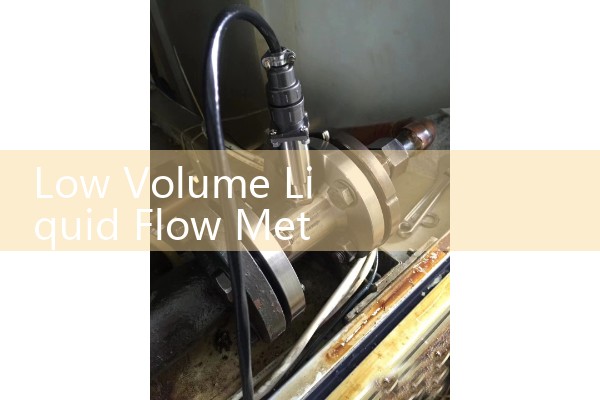
A desalination plant in Saudi Arabia replaced a magnetic flow meter on a 3 L/h antiscalant line because the pulse output was unstable below 10 percent of range. The DN4 oval gear meter solved it after the K factor was set at 1800 pulses per liter.
Common Field Errors and How to Avoid Them
Gas bubbles are the biggest problem in low volume additive loops. A bubble passing through a pulse meter creates a fake volume pulse. Install a small air release valve or maintain 0.5 to 0.8 bar back pressure on the meter outlet. Pulsation from a diaphragm pump also disturbs the pulse train. Use a pulse damper or average the flow over 30 seconds in the PLC.
Another error comes from temperature expansion. A mechanical oval gear meter calibrated at 25 degree C can shift 0.1 to 0.3 percent in K factor at 45 degree C. In most dosing systems that shift is acceptable. But in a 200 L/h hot cleaning chemical loop, use a Coriolis meter or apply temperature correction.
So the pulse scale cannot be set once and ignored. If the chemical changes, viscosity changes, or pump stroke changes, recheck the K factor at the new operating point.
FAQ on Low Volume Flow Meter Calibration for Additive Chemical Loops
Q1: How often should we calibrate a low volume flow meter on an additive loop?
A: For most water treatment and chemical dosing skids, verify the K factor every six months. If the chemical is abrasive or polymer based, check every three months. A shift of more than 2 percent in totalizer volume is a trigger for a full three point calibration.
Q2: Can we calibrate with water if the additive is expensive and hazardous?
A: You can use water for a first pass if the additive viscosity is close to 1 cP. But for polymers, solvents, or acids above 10 cP, use a safe surrogate with similar viscosity and density. Record the correction factor between the surrogate and the process fluid.
Q3: What K factor range should a low volume pulse meter have?
A: Choose a K factor between 500 and 5000 pulses per liter for most 0.5 to 200 L/h loops. The K factor pulse scale must be matched to the PLC input frequency. Lower K factors reduce pulse resolution. Higher K factors may exceed the maximum input frequency of the PLC at full flow.
Q4: Which flow meter types work best for very low additive flow?
A: Oval gear and Coriolis meters handle the low end best. Oval gear is cost effective for clean and medium viscosity liquids. Coriolis is better for mass measurement, aggressive fluids, and wide viscosity swings. Electromagnetic meters work above 5 L/h if the liquid conductivity is above 20 µS/cm.
Q5: What data should a supplier receive for a correct meter and K factor setup?
A: Send the pressure in bar, temperature in degree C, pipe size DN, flow range in L/h or kg/h, viscosity in cP, and chemical name or compatibility note. The supplier then sets the pulse scale before shipment.
Get a Quote for an Additive Loop Flow Meter
Silver Automation Instruments supplies low volume flow meters for DN2 to DN25 lines. The factory in China ships to Southeast Asia, Oceania, Latin America, Africa, and the Middle East. For a quote, send your pressure in bar, temperature in degree C, pipe size DN, flow range in L/h or kg/h, and viscosity in cP. Use WhatsApp at +86-25-52155837 or call +86-25-68650347. WeChat is +86 15365082610. See flow-meter.com.au for the full low flow meter range.
 Hot News
 Related AD