

『Coriolis Mass Flow Meter Working Principle: Phase Angle Inertia Physics』Related information(clamp on meter|electromagnetic meter|venturi meterrotameter|orifice meter|ultrasonic flow meter|mass flow meter|coriolis mass flow meter|coriolis flow meter|magnetic flow meter|magmeter flow meter|magflow flow meter|mag meter flow meter|electromagnetic flow meter|vortex flow meter|turbine flow meter|thermal mass flow meter|thermal flow meter|rotameter flow meter)
Coriolis Mass Flow Meter Working Principle: Phase Angle and Inertia Physics
Quick Answer: A Coriolis mass flow meter measures direct mass flow by detecting the phase angle between two sine wave signals on a vibrating tube. Inertia from the moving fluid creates a Coriolis force that twists the tube. The phase angle in degrees is proportional to mass flow in kg/h.
Silver Automation Instruments supplies Coriolis mass flow meters from DN15 to DN200 for oil and gas, chemical, food and beverage, water and wastewater, marine, and desalination plants. We serve customers in Southeast Asia, Oceania, Latin America, Africa, and the Middle East.
How Inertia Physics Produces the Phase Shift
Inside a Coriolis meter the driver coil forces one or two tubes to oscillate at their natural frequency. With no flow the inlet and outlet sensors see identical sine wave timing. When fluid enters the tube, inertia resists the tube motion on the inlet side. The Coriolis force then adds twist on the outlet side. This creates a small time delay between the two sensor signals. Process engineers call this delay the phase angle.
In practice the phase angle is tiny. A DN25 meter on liquid flow may show 0.03 to 0.8 degrees across a 0 to 150 kg/h range. The transmitter digitizes the signal at 10 kHz or higher. It converts the phase angle to mass flow using a calibration factor stored in the meter memory.
Why Phase Angle Beats Volume Flow in Oily and Aerated Liquids
Here is the thing, a Coriolis mass flow meter does not care about bubbles or changing density. Phase angle is tied to mass inertia, not volume. A vortex or electromagnetic meter measures volume velocity first. If gas slugs enter the line, the reading jumps or drops. A Coriolis meter keeps totalizing mass flow. We have seen this on customer sites many times. A chemical plant in Indonesia ran a 15 percent air entrainment test on a DN15 Silver Instruments meter. The mass total stayed within 0.2 percent.
Sensor Geometry and Signal Processing
Most Silver Instruments Coriolis meters use bent tubes for DN15 to DN50 and straight tubes for larger DN80 to DN200 lines. Bent tubes deliver higher phase angle sensitivity for low flow. Straight tubes have less pressure drop and clean faster in food plants. A PT100 sensor in the tube wall reports temperature. The transmitter uses temperature data to correct tube stiffness.
Digital processing samples the two sensor coils and measures the zero crossing time difference. The time shift is often in microseconds. For a DN15 meter at full flow the time shift may be 30 to 120 microseconds. The phase angle calculation is done on an internal DSP board. The meter then outputs 4-20 mA HART, pulse, and RS485 Modbus.
Field Example from a Paint Plant in Malaysia
A paint manufacturer in Selangor, Malaysia installed a Silver Automation Instruments DN25 Coriolis meter on a solvent dosing line. The fluid was ethyl acetate with viscosity of 0.45 cP. Operating pressure was 6 bar and temperature 35 °C. The meter measured 0 to 400 kg/h with 0.1 percent liquid accuracy. The plant PLC read mass flow and densi
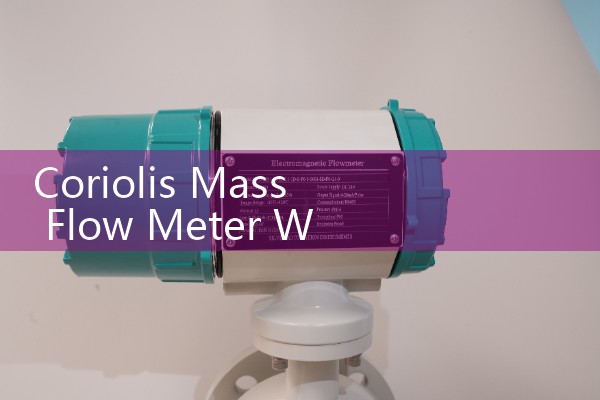
Last year a customer in Vietnam requested a seawater flow meter for a desalination pilot plant. We supplied a DN15 Coriolis meter with no moving parts and a 0 to 120 kg/h range. This unit handled brine at 52 °C and 12 bar. The phase angle signal was clean enough to control a high pressure pump.
Installation Factors That Affect Phase Angle Stability
Do not mount a Coriolis mass flow meter next to a reciprocating pump without pulsation dampening. Use pipe supports on both sides. Keep the meter tubes full. Aeration changes the density output but mass flow remains stable in most cases. If the process liquid can coat the tube wall, specify a polished tube finish.
Grounding matters. We recommend separate signal and power cables. In long cable runs use shielded twisted pair for RS485. This reduces phase angle noise from variable frequency drives. Most engineers skip this part on the first install and later add a ferrite core on the signal line.
Silver Instruments Coriolis Meter Selection
Silver Automation Instruments offers models for liquid, gas, and slurry. Standard accuracy is 0.1 percent of rate for liquids and 0.5 percent for gas. Density accuracy is 0.0005 g/cm³. Temperature range is -200 °C to 200 °C. Pressure ratings go from PN16 to PN100 or ANSI 150 to ANSI 600. Process connections include tri-clamp, flange, and threaded.
Send us your fluid name, viscosity in cP, pressure in bar, temperature in °C, pipe size in DN, and flow range in kg/h. We will return a quote and recommended model within 24 hours.
Silver Automation Instruments
Tel: +86-135-1213-1526
WhatsApp: 86-135-12131526
WeChat: +86 13512131526
Website: flow-meter.com.au
FAQ on Coriolis Mass Flow Meter Phase Angle and Inertia
Does a Coriolis meter send volume flow directly?
No. It sends mass flow directly. The phase angle is proportional to mass flow. Volume flow is a calculated value using live density.
What is a typical phase angle for a DN50 meter on water?
At low flow the phase angle may be 0.02 degrees. At full flow 50 000 kg/h it can reach 1.5 degrees. The exact value depends on tube stiffness and calibration.
Can Coriolis meters read gas flow with the same phase angle principle?
Yes. Gas has lower density so the phase angle per kg/h is smaller. The transmitter applies a different gain and damping filter. Silver Instruments supplies gas Coriolis meters for pressures from 0.5 to 100 bar.
Do temperature and pressure changes affect the phase angle?
The meter corrects for temperature using a PT100 sensor. Pressure has less effect on bent tubes but the straight tube models include a pressure correction curve in the transmitter.
What is the price range for a Silver Instruments Coriolis mass flow meter?
Price depends on line size, wetted material, process connection, and hazardous area rating. A DN15 basic model starts lower than a DN100 high pressure gas model. Send us your parameters and we will provide a full quote.
 Hot News
 Related AD