

『Geopacks Flow Meter Guide: Using Stream Flow Velocity Rods for Educational Environmental Studies』Related information(clamp on meter|electromagnetic meter|venturi meterrotameter|orifice meter|ultrasonic flow meter|mass flow meter|coriolis mass flow meter|coriolis flow meter|magnetic flow meter|magmeter flow meter|magflow flow meter|mag meter flow meter|electromagnetic flow meter|vortex flow meter|turbine flow meter|thermal mass flow meter|thermal flow meter|rotameter flow meter)
Geopacks Flow Meter Guide: Using Stream Flow Velocity Rods for Educational Environmental Studies
Quick Answer
The Geopacks guide shows students how to measure stream velocity with a simple rod and stopwatch. That method works for classroom demos and basic field sampling. For industrial water monitoring, wastewater discharge, or environmental compliance, Silver Automation Instruments supplies electromagnetic and ultrasonic flow meters with 4-20 mA HART output and data logging. Send us your pipe size DN, flow range, and water quality details for a quote.
What the Geopacks Guide Covers
The Geopacks flow meter guide explains how to use a velocity rod to estimate flow in a small stream or open channel. You place a rod in the water, time a float over a set distance, and apply a correction factor. Teachers use this method because it costs little and needs no power supply. Students can see the relationship between cross sectional area and velocity. The guide also includes worksheets for calculating discharge in litres per second. This is useful for geography and environmental science classes.
Where Velocity Rods Work Well
Velocity rods work well in shallow open channels. They work well when the water is clear and the flow is steady. In practice, a teacher in Australia or New Zealand can run this test in a local creek in under one hour. The equipment is cheap and easy to replace. For educational studies, this is enough. You do not need a certified flow meter to explain river hydrology.
Limits of Velocity Rods in Real Flow Measurement
Most engineers skip this part in school. The velocity rod method has high uncertainty. It measures surface velocity only. The correction factor can be 0.8 or 0.9, but it changes with bottom roughness and depth. It fails in turbid water, windy conditions, or when the channel has weeds. If you need data for a discharge permit or a pump station design, a rod and stopwatch will not pass an audit. We have seen this on customer sites many times. A water utility in the Philippines tried to use a portable rod for a temporary wastewater survey. The readings varied by over 30 percent between two operators.
Moving from Educational Rods to Industrial Flow Meters
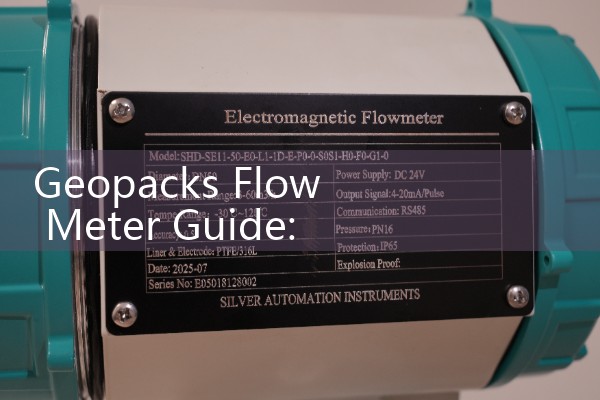
When you need repeatable data, you need a proper flow meter. Silver Automation Instruments supplies several types. For clean water and wastewater, an electromagnetic flow meter works well. It measures volumetric flow directly. No moving parts. You insert it in the pipe or mount it inline. For open channels, you can pair an ultrasonic level sensor with a flume or weir. The output can be 4-20 mA HART or Modbus. A data logger stores flow totals and alarms. This setup suits environmental monitoring stations and school research projects that need published data.
Silver Instruments Options for Water and Environmental Monitoring
Here is the thing.
How to Specify a Flow Meter for Your Site
Send us your pressure in bar, temperature in degrees Celsius, pipe size in DN, and flow range in cubic metres per hour. Tell us if the water has solids, salt, or chemicals. For seawater desalination plants, we often recommend an electromagnetic flow meter with titanium electrodes. For drinking water, PTFE liner and 316L electrodes are enough. For raw sewage, use a flow tube with a hard rubber liner and stainless steel electrodes. A customer in Vietnam asked us last year for a seawater flow meter for a small desalination pilot plant. They gave us DN50, 0 to 30 m3/h, 25 bar, and 35 degrees Celsius. We supplied an electromagnetic flow meter with 4-20 mA HART and a local display. It has run without drift for over 9 months.
FAQ
What is the difference between a velocity rod and an industrial flow meter?
A velocity rod gives a rough surface velocity in an open channel. An industrial flow meter gives repeatable volumetric flow in a closed pipe or channel. The accuracy difference is large. A rod can be 20 to 30 percent off. An electromagnetic flow meter is usually within 0.5 percent.
Can I use a velocity rod for environmental compliance monitoring?
No. Regulators require calibrated instruments with traceable accuracy. You need a flow meter with 4-20 mA output and data logging. Silver Instruments can supply a certificate of calibration for each unit.
Which flow meter do you recommend for a school environmental study?
For closed pipe water studies, choose an electromagnetic flow meter from DN15 to DN50. It is simple, has no moving parts, and gives a local flow rate display. For open streams, use a portable ultrasonic flow meter with a velocity sensor.
What parameters do you need for a quote?
We need pipe diameter DN, fluid type, flow range, operating pressure in bar, and temperature in degrees Celsius. If the fluid is conductive, an electromagnetic flow meter works well. For non conductive fluids like oils, choose an oval gear or Coriolis flow meter.
How do I contact Silver Automation Instruments?
Call us at +86-25-68650347. Use WhatsApp at +86-25-52155837. Or add WeChat +86 15365082610. Send your process data and we will reply within 24 hours.
 Hot Blog
 Related AD