

『Fluxus Flow Meter Technology: Flexim Transit-Time Advancements for High-Temperature Corrosive Fluids』Related information(clamp on meter|electromagnetic meter|venturi meterrotameter|orifice meter|ultrasonic flow meter|mass flow meter|coriolis mass flow meter|coriolis flow meter|magnetic flow meter|magmeter flow meter|magflow flow meter|mag meter flow meter|electromagnetic flow meter|vortex flow meter|turbine flow meter|thermal mass flow meter|thermal flow meter|rotameter flow meter)
Fluxus Flow Meter Technology: FLEXIM Transit-Time Advancements for High-Temperature Corrosive Fluids
Quick Answer: Fluxus transit-time meters from FLEXIM can measure high-temperature corrosive fluids from outside the pipe. The transducers do not contact the liquid, so they avoid direct attack from acid or caustic. Send Silver Instruments your pipe size, fluid name, temperature, pressure, and flow range for a confirmed selection.
Silver Automation Instruments supplies flow meters and process instruments to industrial sites in Southeast Asia, Oceania, Latin America, Africa, and the Middle East. Our team compares clamp-on ultrasonic meters against Coriolis, electromagnetic, vortex, oval gear, and thermal mass meters. For hot acid and brine lines, Fluxus flow meter technology often saves time because there is no pipe cutting and no process shutdown.
Why Transit-Time Clamp-On Meters Fit Corrosive Fluid Lines
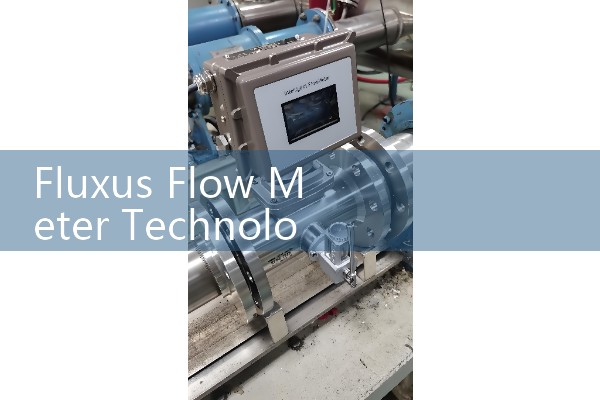
Transit-time ultrasonic meters send an acoustic signal through the pipe wall and into the fluid. The signal travels faster downstream and slower upstream. The meter calculates velocity from the time difference. Because the sensors stay outside the pipe, sulfuric acid, hydrochloric acid, sodium hydroxide, and hot brines do not contact the sensor body.
In practice, maintenance engineers choose clamp-on meters because installation is quick. No flange welding. No spool piece. A technician can install transducers on a DN50 or DN100 line in a few hours. That reduces risk on a hot chemical line.
High-Temperature Limits and the WaveInjector Concept
Standard clamp-on sensors have a temperature limit because the coupling gel and transducer housing degrade. FLEXIM solved part of this with a high-temperature mounting system. It uses a metal waveguide to separate the transducer from the hot pipe. The transducer stays cool and the signal still crosses the pipe wall. Depending on the model and installation, this method can handle fluid temperatures up to 400 °C or higher.
We have seen customer sites use a general-purpose coupling pad on a 250 °C hot oil line. The meter failed within hours because the pad melted. If your fluid runs above 150 °C, tell us before ordering. We will specify the correct waveguide and sensor assembly.
Corrosive Fluids and Lining Considerations
A clamp-on meter does not solve every problem. The signal must pass through the pipe wall and any internal liner. PTFE and rubber liners can absorb signal energy. Thick scale or crystallization can also weaken the signal. A clean caustic soda line at 110 °C may work well. A spent sulfuric acid line with sludge may not work because solids scatter the signal.
Here is the thing: many customers focus on the meter spec and forget the pipe condition. We ask for pipe material, outer diameter, wall thickness, liner type, and liner thickness. These details decide whether a clamp-on transit-time meter works on site.
Typical Installations Where Fluxus Technology Works
A chemical plant in Malaysia used a high-temperature clamp-on meter on a DN80 stainless steel line carrying 98 percent sulfuric acid at 80 °C. The line cou
A water treatment contractor in Saudi Arabia measured hot brine from a desalination pilot plant at 65 °C. The pipe was DN150 carbon steel with a rubber lining. The signal was marginal, but the meter worked after adjusting the transducer positions and selecting the correct pipe profile.
Selection Data You Should Prepare
Most engineers skip this part and then receive a quote that does not fit. Send us these details with your inquiry: pipe outer diameter and wall thickness, pipe material and liner type, fluid name and concentration, fluid temperature and pressure, flow range in m³/h or kg/h, viscosity in cP for thick fluids, and output signal such as 4-20 mA HART or Modbus. Without this data, a clamp-on ultrasonic quote is only a rough estimate.
When to Choose an Inline Meter Instead
Clamp-on transit-time meters are not always the best choice. If the fluid is clean and the pipe is full, a Coriolis mass flow meter gives direct mass flow and density. If the fluid is conductive, an electromagnetic flow meter is accurate and has no moving parts. If the fluid contains solids, gas bubbles, or heavy sludge, clamp-on ultrasonic can fail. In those cases, a vortex meter or oval gear meter may be more stable. Silver Instruments supplies all of these types, so we do not force one technology onto the wrong process.
FAQ: Fluxus Flow Meter Technology for High-Temperature Corrosive Fluids
Can a clamp-on ultrasonic flow meter handle hot sulfuric acid? Yes if the temperature is within the sensor limit and the pipe is full. Provide the acid concentration, temperature, and pipe data. Silver Instruments will confirm the sensor mounting method.
What temperature range does FLEXIM Fluxus cover? It depends on the model and mounting system. Standard clamp-on designs cover lower ranges. High-temperature waveguide installations can handle 400 °C or more on some pipe sizes.
Does a PTFE liner block the signal? It can. Thin PTFE liners may still pass enough signal on a smooth pipe. Thick liners and loose liners often cause failure. We ask for the liner thickness before quoting.
What output signals do these meters support? Typical options include 4-20 mA, pulse, HART, and Modbus. Tell us whether you need a totalizer display, data logging, or remote readout.
Can Silver Instruments supply a clamp-on meter for a high-temperature corrosive line? Yes. Send your pipe size in DN, fluid, temperature, pressure, and flow range. We will recommend a clamp-on transit-time configuration or a more suitable inline meter.
Get a Specific Quote from Silver Instruments
Contact Silver Automation Instruments for a clamp-on ultrasonic flow meter quote. Send us your pressure in bar, temperature in °C, pipe size in DN, and flow range. Tel: +86-25-68650347. WhatsApp: +86-25-52155837. WeChat: +86 15365082610. You can also visit flow-meter.com.au.
 Hot Blog
 Related AD