

『DN50 flowmeter』Related information(clamp on meter|electromagnetic meter|venturi meterrotameter|orifice meter|ultrasonic flow meter|mass flow meter|coriolis mass flow meter|coriolis flow meter|magnetic flow meter|magmeter flow meter|magflow flow meter|mag meter flow meter|electromagnetic flow meter|vortex flow meter|turbine flow meter|thermal mass flow meter|thermal flow meter|rotameter flow meter)
Why are the flow rates of two flow meters on the same pipeline more than four times different?
The possible reasons for the flow rate difference of more than 4 times between two flow meters on a pipeline are as follows: different flow meter specifications: different pipe diameters: If the pipe diameters of two flow meters are different, for example, one is DN50 and the other is DN32, under the same pressure, their flow rates will have significant differences.. This is because the larger the pipe diameter, the larger the volume of fluid that can pass through, resulting in higher flow readings. Different installation locations or conditions for flow meters: Silent installation location: The installation location of the flow meter may affect its reading. For example, if one of the flow meters is installed at a bend in the pipeline or in a location with other fluid dynamics disturbances, its reading may be affected. Fluid conditions: The temperature, pressure, viscosity, and other conditions of the fluid can also affect the reading of the flowmeter. If the fluid conditions at two flow meters are different, their readings may also have significant differences. Internal leakage or malfunction of flow meters: Internal leakage issue: If one of the flow meters has an internal leakage, such as a leakage in the water injection valve, it may record a reading higher than the actual flow rate. Malfunction or error: The flowmeter itself may have malfunctions or errors, resulting in inaccurate readings. This may need to be resolved through calibration or repair. Medium reflux or diversion: Reflux phenomenon: If there is a reflux phenomenon in the medium at one of the flow meters, that is, if some fluid flows back from t
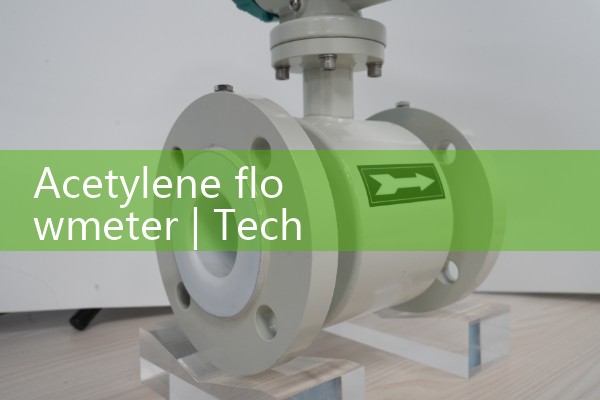
What is the range of DN50 electromagnetic flowmeter?
The suitable range for measuring medium flow velocity with a DN50 electromagnetic flowmeter for general industrial use is 2-4m/s. In special cases, the minimum flow velocity should not be less than 0.2m/s and the maximum should not be greater than 8m/s. If the medium contains solid particles, the commonly used flow rate should be less than 3m/s to prevent excessive friction between the lining and the electrode; For viscous collision detection of bright stagnant fluids, the flow velocity can be selected to be greater than 2m/s. A higher flow velocity helps to automatically eliminate the effect of viscous substances attached to the electrode, which is beneficial for improving measurement accuracy. Under the condition that the range Q has been determined, the size of the flowmeter diameter D can be determined based on the range of the flow velocity V mentioned above. Its value is calculated by the following formula: Q=π D ² V/4 Q: flow rate (㎡/h) D
 Hot Blog
 Related AD