

 Current position > Product detail
『Fox Flow Meter ST Series: Thermal Dispersion Sizing for Industrial Gases and Ventilation Air』Related information(clamp on meter|electromagnetic meter|venturi meterrotameter|orifice meter|ultrasonic flow meter|mass flow meter|coriolis mass flow meter|coriolis flow meter|magnetic flow meter|magmeter flow meter|magflow flow meter|mag meter flow meter|electromagnetic flow meter|vortex flow meter|turbine flow meter|thermal mass flow meter|thermal flow meter|rotameter flow meter)
Fox Flow Meter ST Series Thermal Dispersion Sizing for Industrial Gases and Ventilation Air
Quick Answer: For industrial gas and ventilation air flow, the Fox ST Series thermal dispersion flow meter from Silver Automation Instruments fits inline pipe sizes from DN15 to DN200 and insertion duct sizes up to DN1000 or larger. Send your gas type, process pressure in bar, process temperature in °C, pipe size DN, and minimum and maximum flow rate to get a sized model. This meter works for compressed air, nitrogen, carbon dioxide, biogas, natural gas, and HVAC air without external pressure or temperature compensation.
Thermal Dispersion Sizing Rules for Industrial Gases
Thermal dispersion flow meters measure mass flow directly by sensing heat transfer from a heated sensor to the gas. Unlike a differential pressure device, the ST Series does not need a separate temperature or pressure transmitter to reach mass flow units. Here is the thing. The sizing still depends on gas composition, line pressure, process temperature, and pipe internal diameter. Most engineers skip this part. A DN50 compressed air line at 7 bar and 25 °C has a different heat transfer response than a DN50 nitrogen line at 1 bar. If you send only pipe size, the quote may not match the actual range. We have seen this on customer sites many times.
The ST Series works in line sizes from DN15 to DN200 for inline flow bodies. For ventilation air ducts and large stacks, an insertion probe fits DN65 through DN1000 or larger. In practice, most engineers specify insertion probes for duct air because the installation cost is lower and the flow range is wider. But the insertion length must match the duct internal diameter. A probe that is too short reads a wrong velocity near the wall. For a 600 mm duct, we need the duct internal diameter and wall thickness to size the probe correctly.
Gas Types and Typical Flow Ranges for the ST Series
Common gases include compressed air, nitrogen, carbon dioxide, argon, biogas, natural gas, and ventilation air. Each gas has a different thermal coefficient. Always state the gas composition. A paint manufacturer in Southeast Asia ordered an ST Series meter for compressed air at 8 bar and later tried to use the same meter on a biogas line. The reading shifted by more than 15 percent because the gas thermal properties changed. The ST Series is factory calibrated for the gas you specify. If you change the gas later, a new calibration is needed.
Typical flow ranges for inline ST Series meters vary by gas and line size. A DN25 air line at 5 bar might cover 5 to 80 Nm3/h or 6 to 100 kg/h depending on the plant reference conditions. A DN80 air line at 2 bar might cover 60 to 900 Nm3/h or 70 to 1100 kg/h. These are not guaranteed ranges. We calculate these ranges from your process data. Insertion probes in a 500 mm duct can measure 0.5 to 40 m/s air velocity, which covers most ventilation and exhaust applications.
Model Selection by Pipe Size and Flow Range
The ST Series includes inline and insertion versions. Inline models suit DN15 to DN50 or DN80 process connections with NPT or flange ends. Insertion models suit DN65 and larger lines or ducts. For compressed air in a DN40 line, an inline flow body with a 4 to 20 mA HART output is common. For a ventilation air duct of 600 mm, an insertion probe with Modbus RTU output is often more practical. Silve
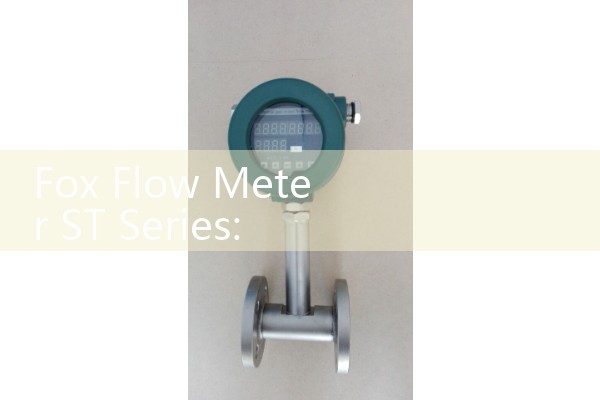
Because the ST Series is a thermal mass flow meter, turndown can reach 100:1 or higher. Low flow sensitivity is good. But if the minimum flow is too close to zero, the signal may be affected by natural convection. For a duct that runs at 0.1 m/s on weekends and 8 m/s on weekdays, an insertion probe may need a special low range calibration. Tell us the full operating envelope, not just the normal flow rate.
Installation Requirements and Signal Output for Ventilation Air
You need to plan straight run. A good starting point is 10 pipe diameters upstream and 5 pipe diameters downstream. For dirty or wet gas, install a filter or moisture separator before the flow meter. Thermal dispersion sensors are sensitive to liquid droplets and particles. A customer in Vietnam asked why a nitrogen meter read high after a compressor failure. The sensor had oil mist coating. A filter solved the problem.
Standard signal outputs include 4 to 20 mA, HART, Modbus RTU, and a local display. For hazardous areas, specify ATEX Zone 1 or Zone 2 when you send the inquiry. The process connection, insertion length, and cable entry type change the model code. Include these details in the first email to avoid multiple revision cycles.
Data Required for a Fox ST Series Quote
To get a same-day sizing sheet from Silver Automation Instruments, send gas type, pipe size DN, process pressure in bar, process temperature in °C, minimum and maximum flow rate, signal output, and hazardous area classification. For insertion meters, also send duct internal diameter and wall thickness. For inline meters, send process connection type and flange rating. This request format works for compressed air, nitrogen, biogas, flare gas, and HVAC air.
Call Silver Automation Instruments at +86-25-68650347 or WhatsApp +86-25-52155837 for a sizing check. WeChat is +86 15365082610. We support customers in Australia, Vietnam, Indonesia, Saudi Arabia, Peru, and Nigeria. Tell us your gas type and line size and we will return a model code with price and lead time.
FAQ: Fox ST Series Thermal Flow Meter Sizing
Q: Can the Fox ST Series measure ventilation air in a 1000 mm duct?
A: Yes. Use an insertion probe with the correct insertion length. Provide duct internal diameter and wall thickness for proper probe sizing.
Q: What is the minimum flow rate for the ST Series in a DN25 compressed air line?
A: The minimum flow depends on pressure and temperature. For air at 5 bar and 25 °C, the minimum flow is often around 5 Nm3/h. We confirm the exact value from your operating range.
Q: Can the ST Series handle biogas with high moisture?
A: Yes, but only with a moisture separator or filter before the meter. Wet gas droplets cause thermal sensor errors and may damage the probe over time.
Q: What signal outputs are available for Fox ST Series meters?
A: Standard outputs include 4 to 20 mA, HART, and Modbus RTU. A local digital display is available. For hazardous areas, specify ATEX Zone 1 or Zone 2.
Q: Do I need pressure and temperature transmitters for mass flow?
A: No. The ST Series measures thermal mass flow directly. You do not need external compensation for most industrial gases and air.