

 Current position > Product detail
『Flow through a Venturi Meter Experiment: Fluid Dynamics Lab Calibration and Head Loss Evaluations』Related information(clamp on meter|electromagnetic meter|venturi meterrotameter|orifice meter|ultrasonic flow meter|mass flow meter|coriolis mass flow meter|coriolis flow meter|magnetic flow meter|magmeter flow meter|magflow flow meter|mag meter flow meter|electromagnetic flow meter|vortex flow meter|turbine flow meter|thermal mass flow meter|thermal flow meter|rotameter flow meter)

Flow Through a Venturi Meter Experiment: Fluid Dynamics Lab Calibration and Head Loss Evaluations
Quick Answer: A Venturi meter experiment measures differential pressure across a converging section. This gives you flow rate, a discharge coefficient, and head loss data. For industrial flow measurement, the same principles apply when you select a magnetic flow meter or Coriolis mass flow meter.
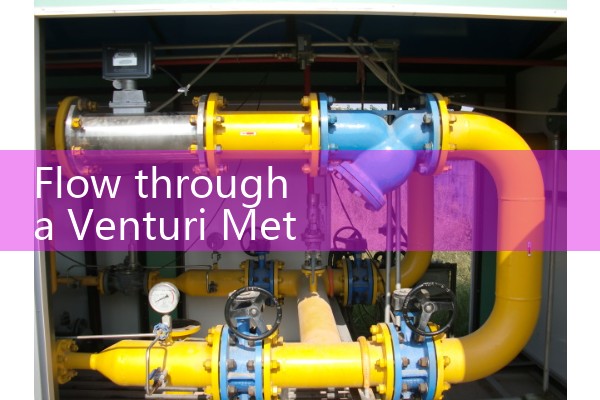
Most engineers know the Venturi meter from a fluid dynamics lab. The device has a straight inlet, a converging cone, a throat, and a diverging cone. Water or air passes through the throat. Pressure taps at the inlet and throat send signals to a differential pressure transmitter. The flow rate is proportional to the square root of the differential pressure.
What the Experiment Actually Measures
In a standard lab run we use a DN50 pipe with water at 20 degrees Celsius. The differential pressure transmitter is ranged from 0 to 30 kPa, accuracy 0.075 percent. Flow rate spans 0.5 to 15 cubic meters per hour. Reynolds number stays between 1.2 x 10^4 and 3.5 x 10^5. The lab technician records differential pressure at seven flow points. The discharge coefficient Cd comes out between 0.96 and 0.99 for a machined Venturi tube. In practice you will see lower Cd values if the pipe has rust or scale. That is why calibration matters.
Flow through a Venturi meter follows the Bernoulli equation. But real flow always has friction. The friction shows up as head loss. The lab evaluation measures permanent pressure loss after the flow returns to full pipe diameter. A Venturi meter loses about 10 to 15 percent of the measured differential pressure. Compare that to an orifice plate. An orifice plate often loses 30 to 40 percent of the differential pressure. This is a key reason process engineers choose Venturi tubes for large water lines or air ducts where pump energy cost matters.
Calibration Steps in a Fluid Dynamics Lab
Here is the thing. You cannot trust the printed Cd value from a textbook. You need to run a wet calibration on your meter. Start with a reference flow standard. A weighing tank or a master flow meter works well. Set the pump speed to get a stable flow. Wait 30 seconds for air bubbles to clear. Record the differential pressure, water temperature, and reference flow at the same time. Repeat this at five or seven flow points from low to high. Then plot actual flow against the square root of differential pressure. The slope of that line gives you the in-situ discharge coefficient. Most engineers skip this part. But the lab data tells you if the meter has an installation effect or a machining defect.
Head Loss Evaluation and Pump Power
Head loss is not the same as differential pressure. Differential pressure is the recovery signal. Head loss is the permanent energy loss. A lab evaluation measures both. In one test on a DN100 water line at 80 cubic meters per hour, the Venturi meter showed a differential pressure of 22.4 kPa and a permanent head loss of 2.6 kPa. That is about 11.6 percent. The same line with an orifice plate showed a differential pressure of 18.9 kPa and a permanent head loss of 6.8 kPa. That is a big difference. Over a year of continuous pumping, the Venturi meter saves a measurable amount of power. This is why water utilities and desalination plants often ask us for
From Lab Data to Industrial Flow Meter Selection
Silver Automation Instruments supplies flow meters for oil and gas, water and wastewater, chemical, food and beverage, and marine industries. The lab principles from a Venturi meter experiment apply to our industrial devices. For example a seawater desalination plant in Vietnam needed a DN150 flow meter for brine discharge. The line pressure was 8 bar, temperature 25 degrees Celsius, conductivity 50,000 microsiemens per centimeter. We supplied an electromagnetic flow meter with 4-20 mA HART output, PTFE liner, and titanium electrodes. The accuracy was 0.2 percent of reading. The customer sent us pressure, temperature, pipe size, and flow range. We selected the meter based on those parameters. You can do the same.
We have seen this on customer sites many times. A paint manufacturer in Southeast Asia replaced an orifice plate with a vortex flow meter on a DN80 solvent line. The pressure was 6 bar. The temperature was 30 degrees Celsius. This swap cut permanent pressure loss by 22 percent. In practice most engineers skip the lab evaluation. But the data from a simple head loss test can save a lot of pump power.
Send us your pressure in bar, temperature in degrees Celsius, pipe size DN, and flow range. We will recommend a magnetic flow meter, Coriolis mass flow meter, vortex flow meter, or oval gear flow meter. Our engineers reply within 12 hours on business days.
Company contact details: Tel: +86-25-68650347. Whatsapp: +86-25-52155837. WeChat: +86 15365082610.
FAQ
What is a Venturi meter and how does it measure flow?
A Venturi meter uses a converging section to increase fluid velocity. The pressure drop across the throat is measured. Flow rate is proportional to the square root of that pressure drop. This is a reliable method for clean water, air, and steam.
How do you calculate flow rate through a Venturi meter?
Flow rate equals the discharge coefficient times throat area times the square root of two times differential pressure divided by fluid density. The lab calibration gives you the discharge coefficient for your specific meter. Without calibration you get errors from 1 to 3 percent.
What is head loss in a Venturi meter?
Head loss is the permanent pressure loss caused by friction and flow separation. A Venturi meter loses about 10 to 15 percent of the differential pressure. This is much lower than an orifice plate. Low head loss reduces pump energy cost.
Can a Venturi meter be used for industrial process control?
Yes but it has limits. Venturi meters work well for clean fluids and large pipelines. They do not work well for dirty liquids or very low flow. In those cases an electromagnetic flow meter or a Coriolis mass flow meter may be a better fit. Silver Instruments can help you compare options.
How does Silver Automation Instruments assist with flow meter calibration and head loss evaluation?
We supply industrial flow meters with calibration certificates. Each meter is tested on a wet calibration rig before shipment. We also help customers select meters that minimize permanent pressure loss. Send us your process data and we will provide a specific model and quote.