

 Current position > News detail
『Grounding Ring for Magnetic Flow Meter Installations: Protecting Low-Voltage Signal Profiles』Related information(clamp on meter|electromagnetic meter|venturi meterrotameter|orifice meter|ultrasonic flow meter|mass flow meter|coriolis mass flow meter|coriolis flow meter|magnetic flow meter|magmeter flow meter|magflow flow meter|mag meter flow meter|electromagnetic flow meter|vortex flow meter|turbine flow meter|thermal mass flow meter|thermal flow meter|rotameter flow meter)
Grounding Ring for Magnetic Flow Meter Installations: Protecting Low-Voltage Signal Profiles
Quick Answer: A grounding ring is the most direct way to protect low voltage signal profiles in magnetic flow meter installations. The ring connects the process fluid to earth and locks the electrode signal to the transmitter ground. Most electromagnetic flowmeter signals are only 1 mV to 10 mV per meter per second of flow.
Silver Automation Instruments supplies grounding rings for metal, PTFE, EPDM, PFA, and polyurethane lined magmeters. We keep sizes from DN15 to DN600 and materials including 304, 316L, Hastelloy C, titanium, and tantalum.
Why a Magnetic Flow Meter Needs a Grounding Ring
A magnetic flow meter reads voltage across two electrodes. The voltage comes from the conductive liquid moving through the magnetic field. The signal level is low. A DN80 meter with a 1 m/s flow velocity might produce only 1 mV to 2 mV at the electrodes. The converter amplifies the electrode signal with a high input impedance stage. If the fluid potential floats, the common mode voltage can drift beyond the input range of the analog front end.
Most plants have AC motors, VFD drives, pumps, welding equipment, and cathodic protection systems. These devices inject stray current into pipes. The current travels through the liquid and the pipe wall. A grounding ring gives that current a known path to earth. The grounding ring also bonds the fluid to the same reference as the converter. The fluid conductivity should be at least 5 µS/cm for standard electromagnetic flowmeters.
In a metal pipe with no liner, a grounding electrode may be enough. In a lined pipe, the liner isolates the fluid from the metal pipe. A grounding ring or grounding electrode then becomes essential. Many engineers skip this on the first purchase. Then the meter reads negative flow during pump stops or shows a noisy totalizer after a VFD upgrade.
How the Low Voltage Signal Gets Disturbed
Here is the thing. The magnetic flowmeter signal is not a strong 4-20 mA loop signal. It is a millivolt level electrode signal. The cable from the sensor to the transmitter carries this weak electrode signal. If the cable shield is grounded at both ends, ground loops can develop. If the shield is grounded only at one end, the low frequency noise needs a separate drain path.
A missing ground path allows the fluid to float. The electrodes then see a common mode voltage that can be tens of volts above the converter ground. The amplifier input may clip. The result is a flow reading that freezes, jumps, or drops to zero. Some converters show an empty pipe alarm even when the line is full.
We have seen this on customer sites many times. Last year a water treatment plant in Malaysia replaced a soft starter with a VFD on a raw water pump. The flowmeter started showing a 12 percent error at low flow. The fix was a pair of 316L grounding rings on a DN200 PTFE lined meter. The stray VFD current no longer entered the electrode signal path.
Grounding Ring vs Grounding Electrode vs Lining Protector
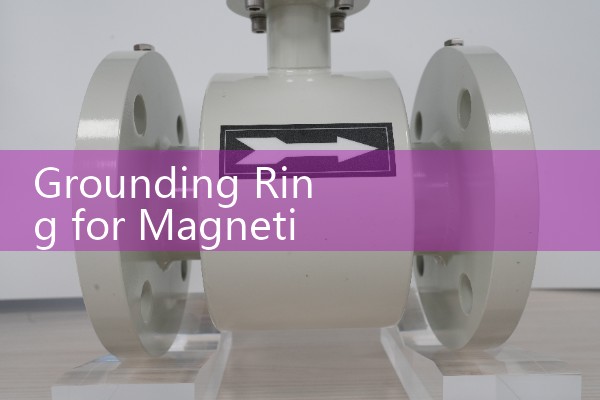
Grounding rings sit between the meter flange and the pipe flange. They contact the process fluid and the metal piping. A grounding electrode is a third or fourth electrode built into the sensor. It also contacts the fluid, but it has a smaller wetted area. A lining protector is similar to a grounding ring but is intended mainly to protect the liner edge from solids or abrasive flow.
For clean water and light chemicals, a grounding electrode is often enough. For wastewater, sludge, abrasive mining slurry, and PTFE lined meters, a grounding ring is the better choice. The larger contact area gives lower resistance. The ring also protects the liner flange face from erosion.
Do not assume that the metal pipe provides grounding through the flange bolts. But the liner usually extends over the flange face. The gasket surface may also be non-conductive. The bolts themselves may carry current, but they are not a reliable signal reference.
Material Selection for Grounding Rings
Match the grounding ring material to the process fluid. For municipal water and treated wastewater, 316L stainless steel works well. For raw sewage with hydrogen
A chemical plant in Vietnam with a PTFE lined magmeter on a mixed acid line used Hastelloy C grounding rings. The ring material must survive the same corrosion as the electrodes. Silver Automation Instruments can supply grounding rings in 304, 316L, 316Ti, super duplex, Hastelloy C, titanium, and tantalum. The ring thickness depends on the pipe size and pressure class. A DN50 PN16 ring may be 3 mm thick. A DN400 PN25 ring may be 6 mm thick.
Always state the liner material when requesting a quote. PTFE and PFA lined meters usually need grounding rings because the liner is non-conductive. Rubber and EPDM liners are also non-conductive. Polyurethane is non-conductive as well.
Installation Details for Grounding Rings
Install the grounding ring between the meter flange and the adjacent pipe flange. Use a gasket on each side of the ring. The sequence from pipe to meter should be pipe flange, gasket, grounding ring, gasket, meter flange. The ring must touch the process fluid on the inside diameter. The flat face of the ring must match the flange face of the meter and pipe.
Use a copper wire from the grounding ring tab to the transmitter ground terminal or the plant earth bar. Keep the wire as short as possible. A long ground wire can act as an antenna. Do not run the ground wire in the same conduit as the electrode signal cable.
Bolt torque matters. Uneven torque can crack the liner or deform the ring. Follow the flange class torque values. For ANSI 150 and PN16 flanges, typical torque for a DN80 meter is around 30 Nm to 50 Nm depending on gasket type. Check with your pipe fitters.
How to Specify a Grounding Ring Set
Send Silver Automation Instruments the following data. Pipe size in DN or inch. Flange standard such as ANSI 150, PN10, PN16, JIS 10K, or AS 2129. Liner material. Process fluid. Fluid conductivity. Operating pressure in bar. Operating temperature in degrees Celsius. Flow range in m3/h or L/min.
We will select the ring material and thickness. We will also confirm whether you need a grounding electrode instead. For a DN100 electromagnetic flowmeter on a clean water line with PN16 flanges, a pair of 316L grounding rings usually costs less than a full service call. For a DN300 sludge line with PTFE liner and abrasive solids, a 316L ring set can pay for itself by preventing one liner failure.
Contact us at Tel: +86-25-68650347, Whatsapp: +86-25-52155837, or WeChat: +86 15365082610. Send your pipe size, fluid, pressure, temperature, and flow range. We will provide a quote for the magmeter and the correct grounding ring set.
FAQ
Do I need a grounding ring if my magnetic flow meter has a grounding electrode?
Not always. A grounding electrode works for many clean water and light chemical services. A grounding ring gives a larger contact area and protects the liner. Use a ring for wastewater, sludge, abrasive fluids, and PTFE lined meters.
Can I use the same grounding ring material as the electrode?
Yes. If the electrodes are 316L, use 316L rings. If the electrodes are Hastelloy C, use Hastelloy C rings. For seawater, use titanium rings with titanium electrodes.
What happens if I install the meter without grounding rings in a plastic pipe?
The fluid may float. The signal may drift, freeze, or show an empty pipe alarm. The converter may read flow even when the pump is off. Install grounding rings or use a meter with grounding electrodes.
Do grounding rings protect the PTFE liner?
Yes. The ring covers the inner edge of the liner at the flange face. It reduces erosion from solids and prevents the liner from peeling. Grounding rings help in mining, dredging, and wastewater sludge lines.
What sizes and standards can Silver Instruments supply?
We supply grounding rings from DN15 to DN600. We cover ANSI 150, ANSI 300, PN10, PN16, PN25, JIS 10K, and AS 2129 flange standards. Other sizes are available on request.