

 Current position > News detail
『Air Volume Flow Meter: Sourcing High Capacity Commercial Ventilation Transducers』Related information(clamp on meter|electromagnetic meter|venturi meterrotameter|orifice meter|ultrasonic flow meter|mass flow meter|coriolis mass flow meter|coriolis flow meter|magnetic flow meter|magmeter flow meter|magflow flow meter|mag meter flow meter|electromagnetic flow meter|vortex flow meter|turbine flow meter|thermal mass flow meter|thermal flow meter|rotameter flow meter)
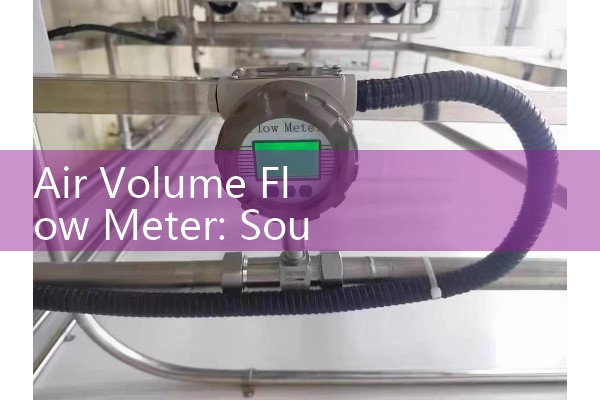
Air Volume Flow Meter: Sourcing High Capacity Commercial Ventilation Transducers
Quick Answer: For most high capacity commercial ventilation projects, an insertion thermal mass flow meter or a differential pressure transmitter with an averaging probe offers the best repeatability and installed cost. Silver Automation Instruments supplies air volume flow meters and commercial ventilation transducers for duct sizes from DN100 to DN2000 and air velocity up to 60 m/s. Send duct size, velocity range, temperature range and output signal to get a quote.
What to Specify Before Sourcing an Air Volume Flow Meter
Most engineers skip this part and later order the wrong transducer. For commercial ventilation, do not start with a model number. Start with duct size, air velocity range, air temperature and building automation output. A fresh air damper in a shopping mall in Vietnam normally runs between 3 m/s and 12 m/s. A car park exhaust duct might hit 20 m/s during evening peak hours. A hospital air handling unit can move 80,000 m³/h. The meter must stay stable at low night flow and read full scale without drift.
Here is the thing. Air flow is not the same as pipe flow. In a large rectangular duct, the velocity profile changes with fan speed. A probe that sits in one spot only measures one point. That is why insertion depth matters. Give us the internal duct width and height in millimetres. We will calculate the correct probe length.
Thermal Mass Flow Meter or Differential Pressure Transmitter
In practice, both work. A thermal mass flow meter reads mass flow directly. It handles low velocity better than a differential pressure transmitter. This matters when a commercial building runs night purge mode from 1 m/s to 3 m/s. Silver Instruments offers insertion thermal mass flow meters with 4-20 mA HART and RS485 Modbus. Accuracy is about plus or minus 1.5 percent of reading plus 0.3 percent full scale. Probe length can be trimmed to fit duct sizes from DN80 to DN3000.
A differential pressure transmitter with an averaging pitot tube costs less for very large ducts. It produces a velocity pressure signal. You need a separate calculation or a transmitter with square root output. For outdoor air intake in a humid market such as Indonesia or Malaysia, condensation is a real problem. We have seen customer sites where moisture damaged an unheated differential pressure cell. Specify a stainless steel diaphragm and check the IP rating. IP65 is the minimum for outdoor air duct mounting.
High Capacity Commercial Ventilation and Duct Size Considerations
A high capacity system means different things in different regions. A medium shopping mall in Southeast Asia may have a fresh air duct of DN1200 and carry 45,000 m³/h. A district cooling plant in the Middle East could move more mass flow through the same duct because the air density changes with temperature. This is why an air volume flow meter should output standard volumetric flow or mass flow. Ask for normal cubic meters per hour or kg/h. Avoid a device that only gives velocity unless your building automation system can do the density correction. But do not assume the BAS will do the correction.
Insertion probes are cheaper to install on large ducts. The probe depth is usually 1/8 to 1/2 of duct diameter. For rectangular ducts, you need the internal dimension in millimetres, not the overall air handling unit size. If the site has limited straight run, tell us before ordering. A thermal probe can tolerate 10D upstream and 5D downstream. A differential pressure averaging probe may need more straight run to keep repeatability. Some installers add a flow conditioner but that adds pressure drop and maintenance work.
Output Signal and BAS Integration
Most commercial ventilation transducers use 4-20 mA HART or RS485 Modbus. Building automation systems from Siemens, Honeywell, Johnson Controls or Schneider Electric will accept both. If you have a long cable run from a roof air handling unit to the control panel, use RS485 Modbus. It survives electrical noise better. If the BAS only has an analog input card, use a 4-20 mA transmitter with HART. HART is useful when the commissioning engineer wants to re-range the device without opening the duct.
We also supply digital displays and totalis
Common Commercial Ventilation Applications
Fresh air intake for commercial towers. A high rise in Singapore often needs to measure 30,000 to 70,000 m³/h. The duct is frequently rectangular, for example 2000 mm by 1200 mm. An insertion thermal flow meter with a 500 mm probe can work if it reaches the centre line. Confirm probe insertion length before purchase.
Car park exhaust. This application has vibration, dust and humidity. A differential pressure transmitter with a metal diaphragm and a purge port is common. Add a small filter to the impulse lines. If you use an averaging probe, keep the ports facing away from dust loading. Silver Instruments has supplied pressure transmitters for this in Malaysia and the Philippines.
Laboratory ventilation and fume hood exhaust. Here you need repeatability more than absolute accuracy. A thermal mass flow meter gives a fast signal for air flow alarms. Set the relay at low flow. The transducer sends an alarm if the exhaust fan fails. In one project in Saudi Arabia, the signal was also used to close a damper automatically.
Installation and Commissioning Mistakes to Avoid
The most common mistake is buying a meter based on pipe size only. Air flow range is the real selection variable. A DN800 duct at 0.5 m/s and a DN800 duct at 25 m/s need different transducers or different probe ranges. The second mistake is not checking the insertion depth. For rectangular duct, the probe must reach the average velocity zone. The third mistake is ignoring temperature. Air at 10 °C and air at 70 °C affect thermal mass flow accuracy. Check the meter calibration range.
Also avoid putting the sensor right after a fan elbow. Swirl will shift the reading. If you cannot find a good straight section, tell us. We can suggest a multi-point thermal probe or a higher differential pressure range.
Sourcing from Silver Instruments
Silver Automation Instruments supplies air volume flow meters and commercial ventilation transducers to HVAC contractors and system integrators in Southeast Asia, Oceania, Latin America, Africa and the Middle East. We keep a practical range of insertion thermal mass flow meters, duct pressure transmitters and air flow transmitters. We do not sell consumer air quality monitors. We focus on industrial and commercial building measurement.
Send us these details for a quote. Duct size in DN or millimetres. Air velocity range in m/s. Air temperature range in degrees Celsius. Required output signal. Power supply 24 VDC or 220 VAC. We will reply with a transducer model, price and lead time. Contact Silver Instruments by phone at +86-25-68650347. WhatsApp at +86-25-52155837. WeChat at +86 15365082610. For product details, visit flow-meter.com.au.
FAQ: High Capacity Commercial Ventilation Air Flow Measurement
What is better for a large air duct, a thermal mass flow meter or a differential pressure transmitter? A thermal mass flow meter is often better for low velocity and direct mass flow. A differential pressure transmitter costs less for very large ducts and high flow. Both work if installed with a good straight run.
Can I use an air volume flow meter for outdoor air intake in a humid climate? Yes. Choose a device rated for high humidity. A stainless steel probe and IP65 or IP67 housing are required. Condensation must not enter the electronics.
Do you supply for rectangular ducts? Yes. We need the internal width and height in millimetres. We calculate the insertion depth and probe length.
What output signal should I order for BAS integration? 4-20 mA HART if the control panel has analog inputs. RS485 Modbus if you have a long cable run or multiple devices on one bus.
What is the typical accuracy for commercial ventilation? A thermal mass flow meter is about plus or minus 1.5 percent of reading plus 0.3 percent full scale. A differential pressure system depends on probe and transmitter. In practice, repeatability is more important for ventilation.