

 Current position > Product detail
『Garmin Fuel Flow Meter: Marine NMEA 2000 Connected Outboard Engine Sensors』Related information(clamp on meter|electromagnetic meter|venturi meterrotameter|orifice meter|ultrasonic flow meter|mass flow meter|coriolis mass flow meter|coriolis flow meter|magnetic flow meter|magmeter flow meter|magflow flow meter|mag meter flow meter|electromagnetic flow meter|vortex flow meter|turbine flow meter|thermal mass flow meter|thermal flow meter|rotameter flow meter)
Garmin Fuel Flow Meter: Marine NMEA 2000 Connected Outboard Engine Sensors
Quick Answer: Garmin fuel flow sensors like the GFS 10 connect directly to NMEA 2000 networks on outboard engines. They push fuel rate and total consumption data to a chartplotter display. For commercial fishing boats, crew vessels, or engine test cells that need higher accuracy, bidirectional flow, or mass measurement, Silver Instruments supplies industrial flow meters with 4-20 mA HART, pulse, and Modbus outputs that can still feed into NMEA 2000 through a gateway.
How Garmin Fuel Flow Meters Work on Marine Engines
Garmin designed its fuel flow sensors for simple outboard installations. The sensor sits inline between the fuel tank and the engine. Inside the body a small turbine spins as fuel passes. The electronics capture each rotation and convert the signal to NMEA 2000 PGN messages. A chartplotter reads those messages and displays litres per hour, total fuel used, and even estimated range. The power comes straight from the NMEA 2000 backbone. No extra wiring is needed. This plug-and-play setup works well for weekend boaters and light commercial operators who only need a rough fuel burn number.
Where a Standard NMEA 2000 Fuel Flow Sensor Falls Short
Here is the thing. Turbine sensors have a minimum flow threshold. At idle rpm on a 40 hp outboard the fuel flow can drop below 4 litres per hour. The turbine may stall. The chartplotter then shows zero or jumps around. In practice many mechanics in Southeast Asia and the Middle East see this on Yamaha and Mercury outboards. Also turbine sensors cannot tell you flow direction. When a dual-engine boat returns fuel through a common-rail return line the sensor measures only one direction. The data becomes useless for net consumption. Most engineers skip this part. Garmin sensors are not built for high-viscosity fuels or biodiesel blends above B20. The plastic body and small turbine bearings wear fast with anything thicker than pure diesel. We have seen this on customer sites many times: a Thai longtail boat operator used a GFS 10 with B30 biodiesel and the sensor failed in six weeks.
Industrial Flow Meter Options for Marine Fuel Measurement
Silver Automation Instruments builds flow meters for the real marine environment. Three types fit outboard and inboard fuel lines without the headache of turbine stall.
Oval gear flow meters. A pair of oval-shaped rotors measure every drop of fuel. The meter delivers a pulse output that is linear down to 2 litres per hour. DN4 to DN25 sizes cover fuel lines from 0.7 litres per hour up to 2,500 litres per hour. Accuracy stays at plus or minus 0.5 percent of reading across the whole range. An aluminium body with FKM seals handles diesel, biodiesel up to B100, and kerosene. For gasoline we use stainless steel internals. A paint manufacturer in Surabaya, Indonesia, switched from a turbine sensor to our oval gear meter on a generator test bench last year. Their repeatability improved from 2 percent to 0.3 percent.
Coriolis mass flow meters. When you need direct mass flow in kg per hour instead of volume, a Coriolis meter is the answer. It ignores density changes caused by temperature swings in the engine room. No calculation factors. No compensation tables. The meter outputs mass
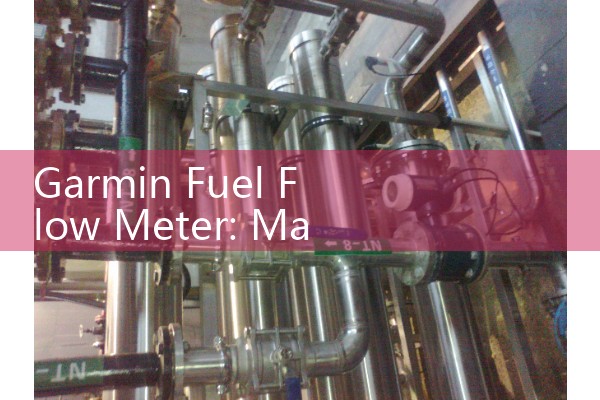
Electromagnetic flow meters. For cooling water loops or raw water intake on outboard engine test rigs we often supply mag meters. They handle seawater with PTFE liners and Hastelloy electrodes. No moving parts means no clogging from barnacle bits or sand.
Real-World Example: A Tuna Boat in Indonesia
A fishing fleet operator in Bitung, North Sulawesi, contacted us last month. He ran three 85 hp outboard engines and needed to track fuel burn to manage trip cost. He tried Garmin sensors but the erratic idle readings and biodiesel swelling ruined two units. We suggested a DN6 oval gear fuel meter with a stainless steel body and a pulse divider board. The pulse output connected to a NMEA 2000 gateway from a third-party supplier. Now his Furuno MFD reads accurate consumption from idle to wide open throttle. Return on investment came in 11 trips based on fuel saved.
Output Integration: From 4-20 mA to NMEA 2000
Many boat owners ask if an industrial flow meter can talk to a marine network. The short answer is yes. Silver Instruments meters offer pulse, 4-20 mA HART, RS485 Modbus, or frequency outputs. To bridge the gap you add a signal converter or gateway. For example a pulse-to-NMEA 2000 converter costs less than 150 US dollars and maps fuel flow pulses to PGN 127489 engine parameters. A Modbus-to-NMEA 2000 gateway pushes flow, temperature, and density data as custom PGNs. This setup gives you industrial sensor reliability with the same chartplotter visibility you expect from Garmin. One installation on a dive boat in Dahab, Egypt, uses a Coriolis meter with a Modbus gateway to show fuel flow and exhaust gas temperature on a single screen.
Selecting the Right Fuel Flow Meter for Your Marine Engine
Match the meter to the job. Fuel type comes first. Diesel, petrol, biodiesel blend, or Jet A1. The wetted materials must be compatible. Flow range matters. A 15 hp outboard at cruise burns 6 to 10 litres per hour. A 200 hp outboard burns 60 to 80 litres per hour. Pipe size DN8 fits most outboard fuel lines but we also stock DN4 for small kicker engines and DN15 for larger inboards. The output signal must match your data logger or gateway. If you need ATEX Zone 1 for a fuel tank compartment we have certified models. If your boat sits in salt water ask for 316L stainless housings.
Silver Instruments Contact for Marine Flow Meter Inquiry
Do not send a generic request. Send us your fuel type, flow rate in litres per hour, pipe size DN, and the signal you need: 4-20 mA, pulse, or Modbus. Mention if the meter must handle return fuel flow or biodiesel. Our engineers will reply within one working day with a recommended model, a dimension drawing, and a price. Email: [email protected]. Phone: +86-135-1213-1526. WhatsApp: 86-135-12131526. WeChat: +86 13512131526. Silver Automation Instruments ships from China to Southeast Asia, Oceania, the Middle East, Africa, and Latin America. Visit flow-meter.com.au for full specifications.